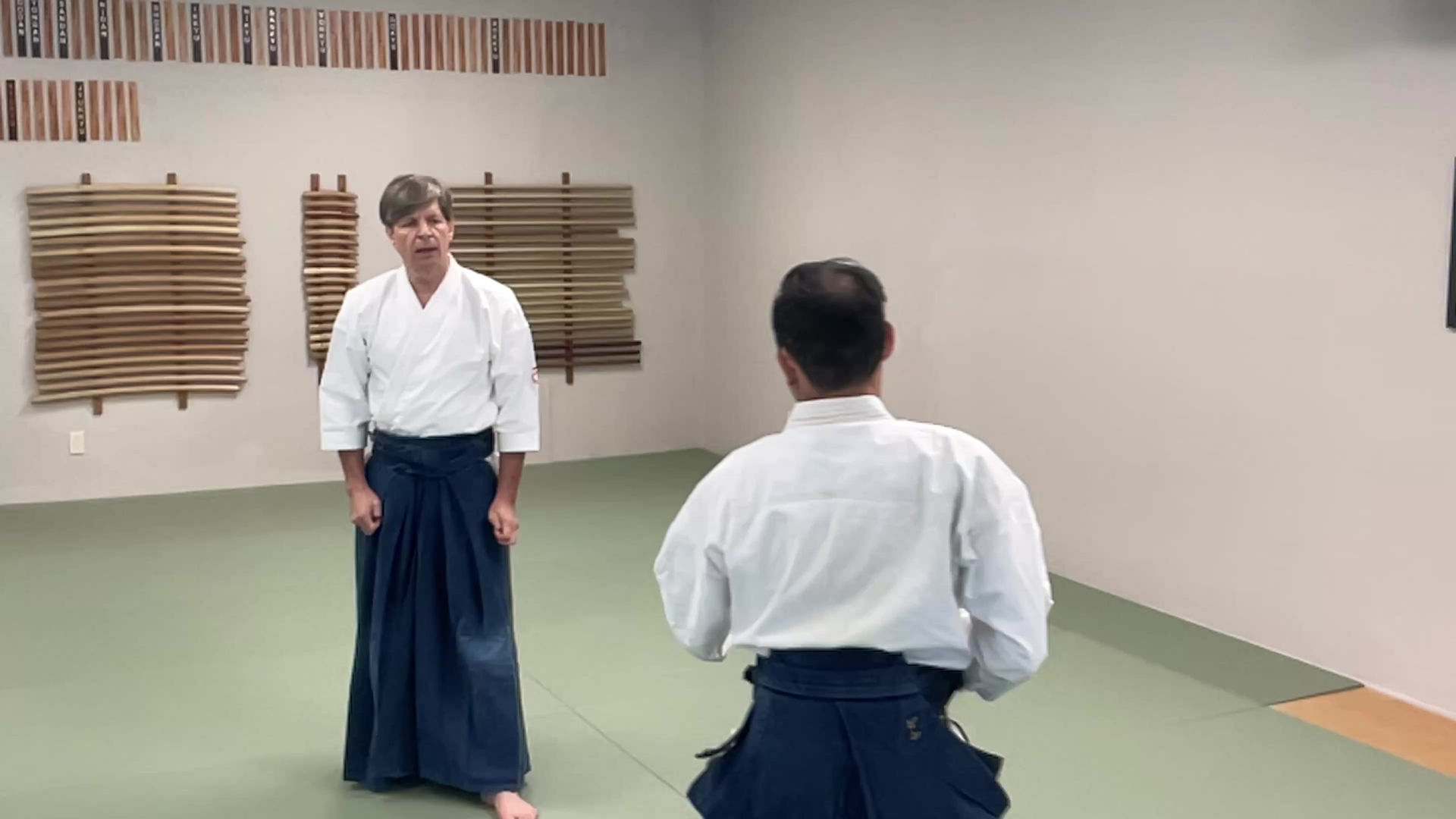


When in JAPAN . . . Your Etiquette Gazette
Just 5 weeks to training at Hombu Dojo! . . .
Regular classes are usually restricted to upper ranks but I have approval for all of us to train together!
Most of you are ac-customed to the customs but here are a few pointers specifically for training at Hombu Dojo –
Greet everyone everywhere with a bow and “Konnichiwa” or “Hello” (English is fine, even welcome)
Fill out a training form and pay your fee at the entrance
Remove and store your shoes in the shoe rack
Dressing rooms – Women’s on 2F, Men’s on 3F
Announce yourself when you enter the dressing room with “Shitsureishimasu” or “Konnichiwa”
Store your change of clothes in a Y100 locker, refunded when you replace the key at the end of class
Regular classes will be 3F, different entrances for women and men
Women enter the regular classroom on 3F at the top of the stairs
Men enter the regular classroom through the men’s locker room
The locker rooms are cramped so practice respectful maai and change quickly
Clean uniforms (no stains) a must, Peachtree patches welcome
Bow when you step onto the mat and sit in seiza and bow first to the tokonoma, then also bow to the whole dojo
Usually you have the same partner all class so you should pair up Peachtree or find a Hombu partner quickly
Yukyusha should line up on a row near the back of the dojo, yudansha can lineup toward front
Do not sit in front of the tokonoma or with your back or feet toward the tokonoma
Spectators sit in back on a hardwood floor so dress comfortably and warmly and watch quietly, no phones or photos
Train quietly and respectfully, sitting in seiza during instruction if the instructor is nearby
Throw to the outside of the mat and be vigilant about your and others’ ukemi, big rolls or breakfalls are not appropriate - see below!
At the end of class, feel free to lend a hand with cleaning the mat
We will have a photo op with each instructor at the end of class so stick around and wear your hakama
Announce yourself when you leave the dressing room with “Shitsureishimasu” or “Otsukaresama desu”
